

If you manage a production line, you know the feeling. An operator calls in the middle of a shift, the HMI screen is dead. Blank. No touch response. The machine can't run without it, and every hour of downtime is costing real money. You call Siemens for a replacement and they quote you €1,200 with an eight-week lead time. Eight weeks.
There's a better way, and more factories are catching on. Used and professionally refurbished Siemens HMI panels, tested, warranted, and shipped within 48 hours, are keeping production lines running across Europe at half the cost of new. The same part numbers, the same performance, none of the wait.
This isn't about cutting corners. It's about being smart with capital. Here's what you need to know.
The numbers don't lie
A Siemens KTP700 Comfort panel costs around €1,200 new from the manufacturer. The same model, professionally refurbished and tested, runs €400 to €600. Step up to a TP1900 Comfort and you're looking at €3,500 new versus €2,200 refurbished. Those aren't marginal savings, they're the kind of numbers that change how you budget for automation.
But the purchase price only tells part of the story. New panels from Siemens often have lead times of four to eight weeks, sometimes longer for older models nearing discontinuation. A refurbished unit ships in 24 to 48 hours. When a machine is down, that difference is measured in tens of thousands of euros of lost production.
Then there's the inventory angle. If you're running 30 or 40 HMIs across your facility, keeping one spare of each model as insurance is expensive at new prices. At refurbished prices, it starts to make sense, and having a spare on the shelf turns a potential week of downtime into a one-hour swap. For a mid-sized operation, switching to refurbished for non-critical replacements can free up €15,000 to €30,000 a year in your automation budget. That's money you can put toward expansion, process improvements, or just a healthier bottom line.
What "refurbished" actually means
The word gets thrown around loosely, so let's be specific. A professionally refurbished HMI isn't just wiped down and put back in a box. The process that separates a reliable refurbished unit from a gamble looks like this:
Every incoming panel goes through a full diagnostic, touchscreen responsiveness, display brightness and uniformity, every communication port (Ethernet, PROFIBUS, MPI), processor performance, the works. Faulty components get flagged and replaced with OEM-grade parts, backlight inverters, capacitors, connectors, touchscreen overlays. The unit gets the latest compatible firmware and is reset to factory defaults so it integrates cleanly into your system.
Then comes the part that separates the serious suppliers from everyone else: burn-in testing. A properly refurbished panel runs continuously for 48 to 72 hours under operational conditions, catching the latent defects that only show up after extended runtime. If it passes, it gets packed with anti-static protection and foam inserts designed to survive transit. If it doesn't pass, it goes back to the bench.
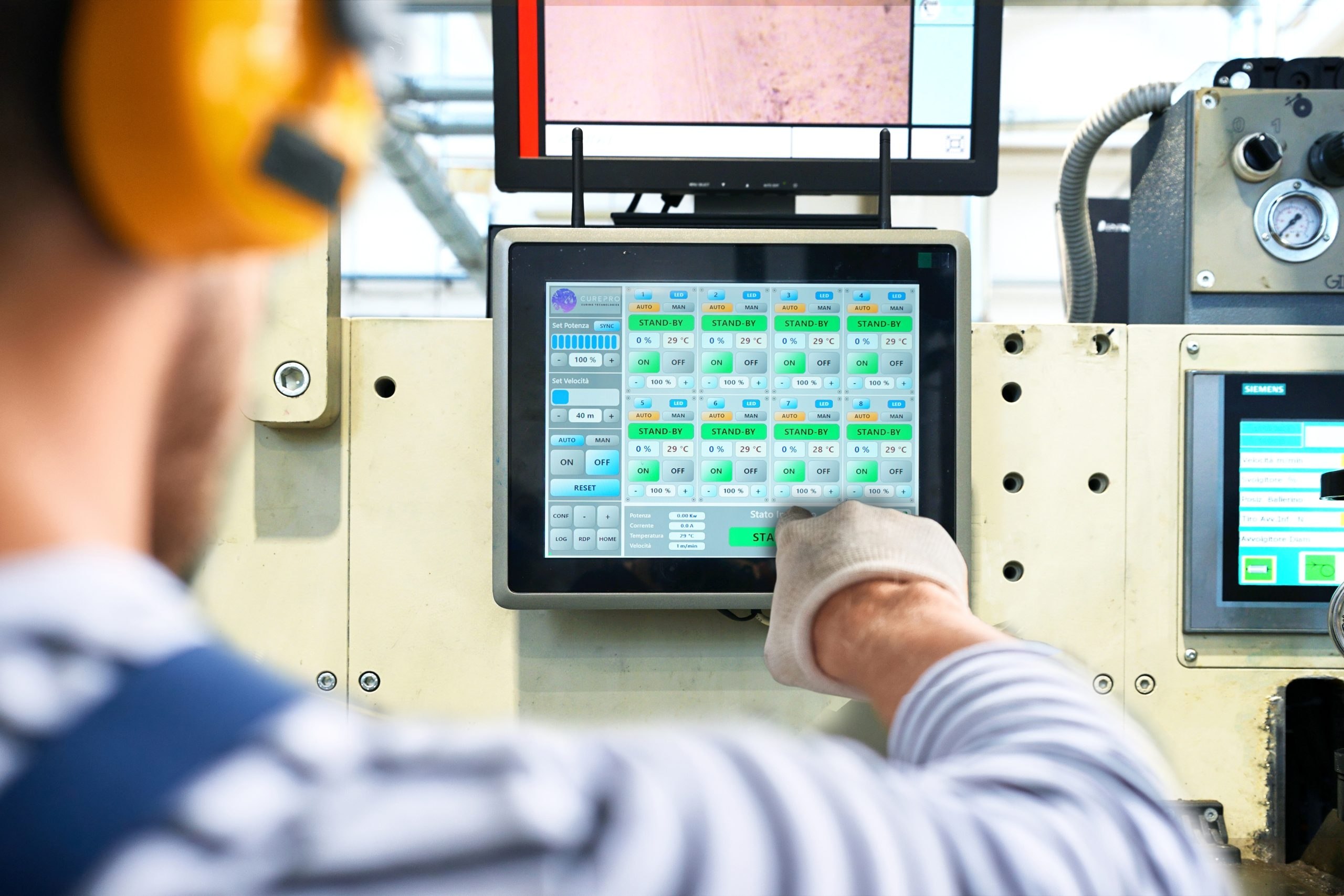
When you're evaluating a supplier, ask about their testing process directly. If they give you a vague answer like "we check everything," that's not enough. You want to hear specifics: how long the burn-in runs, what equipment they test on, and whether they'll share a test report. A supplier who won't show you their process probably doesn't have much of one. Also look for at least a 90-day warranty on used parts and 12 months on refurbished. If a seller offers "as-is" units with no warranty and no testing documentation, the lower price isn't worth the risk, a panel that fails in two weeks costs you far more than you saved.
Which models make the most sense to buy used
Not every Siemens HMI is equally available on the used market, and some deliver better value than others.
The KTP Basic series, the KTP700 and KTP900, are the sweet spot. These panels handle the majority of factory automation tasks: machine visualization, simple process control, operator input. They don't have the premium features of the Comfort series (multi-touch, high-brightness displays for harsh lighting), and that's exactly why they make sense used. A refurbished KTP700 Basic runs €400 to €500, does everything most machines need, and there are enough of them in circulation that finding one in stock is rarely a problem.
The Comfort series, KTP700 Comfort, KTP1200 Comfort, is where you go when the application demands more. Better displays, more responsive touch, built for high-vibration or outdoor installations. Refurbished they run €800 to €1,600 depending on screen size, which is still a solid discount from the €1,400 to €2,200 new price. If your machine needs the extra capability, the savings are proportionally similar.
Then there are the legacy panels, TP177B, MP277, the older generation still running on thousands of S7-300 and S7-400 systems across Europe. Siemens has discontinued these, so new isn't even an option. The refurbished market is literally the only way to keep these systems running without a full controls upgrade. A quality refurbished TP177B costs €300 to €450. The alternative is re-engineering your entire HMI program for a newer panel, which costs a lot more than that.
See what Siemens HMI panels we have in stock right now
Repair or replace? A quick way to decide
Some HMI failures are surprisingly cheap to fix. A dead backlight is often just the inverter board, €80 to €150 to replace. An unresponsive touchscreen can be fixed with a new overlay. Communication errors are frequently cable or port issues, not the panel itself. If your unit is less than five years old and the display and processor are fine, repair usually makes sense.
Other failures aren't worth the effort. A cracked LCD panel costs almost as much to replace as a whole refurbished unit. A processor or main board failure on an older panel becomes uneconomical fast. Multiple simultaneous failures usually mean the unit has reached end of life. And if it's a discontinued model where replacement parts are scarce, you're better off sourcing a refurbished replacement than hunting for components that haven't been made in years.
The rule of thumb I use: under five years old with a single, mechanical failure, repair. Over eight years old with multiple issues, replace with a refurbished unit. It's not a hard law, but it's right more often than it's wrong.
Getting it running once it arrives
Refurbished HMIs come reset to factory defaults, so there's a bit of setup work before they're operational. It's straightforward if you have an automation technician on staff, most facilities complete it in an hour or two.
Before the panel even shows up, do three things. First, verify the part number matches exactly, one digit off and it won't work with your PLC program. Second, export a backup of the HMI program from your existing unit if it's still accessible. Third, check that your PROFINET or PROFIBUS cables are in good shape, there's no point installing a tested panel on a failing network cable.
When the panel arrives, you'll need to set the IP address for network communication, load your HMI project via TIA Portal or WinCC Flexible, calibrate the touchscreen, and test all connected I/O points. If you haven't used TIA Portal before, Siemens has the software and documentation here. Most panels use the same configuration workflow, so once you've done one, the rest are faster.
The bigger picture
There's an environmental argument here too, and it's not just corporate feel-good material. The EU Circular Economy Action Plan is pushing manufacturers toward sustainable sourcing, and industrial electronics contain significant amounts of rare earth elements and metals that are energy-intensive to extract. Choosing refurbished extends the life of hardware that's already been manufactured, keeps electronics out of landfills, and reduces demand for new raw materials. For companies that need to demonstrate sustainability in their supply chain, and that's an increasing number, refurbished components check a real box.
But the practical argument is stronger than the environmental one. Refurbished Siemens HMI panels work. They cost half as much. They arrive in two days instead of two months. And when you buy from a supplier who actually tests their stock and stands behind it, the risk is minimal. For most factory automation needs, it's not a compromise, it's the smarter way to buy.
We keep a range of tested Siemens HMI panels at Samonde, from current KTP models to legacy TP and MP series. Browse what's available or tell us what you need, and if we don't have it in stock, we can usually source it fast.
Also worth reading: SIMODRIVE 611 common failures and fixes, our SINAMICS fault code guide, common HEIDENHAIN encoder problems, and the Buyer's Guide to Used Industrial Parts.


